This post may contain affiliate links – if you buy through them, I may earn a small commission at no extra cost to you, which helps support the site. All opinions shared on this website are entirely my own.
Choosing the right baby bottle can feel like a mammoth task, especially when you’re juggling the chaos of daily life with two little ones in tow. What I wanted most was something practical, easy to clean, and gentle enough for my baby’s delicate tummy. For more feeding essentials, also check out my guides on best baby bottle sterilisers, best breast pumps, and my back-to-school guide to lunch boxes and water bottles.
What to Look For in Baby Bottles
- Material: Opt for BPA-free plastic, glass, or silicone.
- Nipple shape and flow: Slow flow is ideal for newborns to prevent choking or overfeeding.
- Anti-colic features: Vents or valves help reduce the amount of air your baby swallows.
- Ease of cleaning: Dishwasher-safe bottles with fewer parts save time.
- Combination feeding: Some bottles mimic the breast, making them better for babies who are both breastfed and bottle-fed.
Quick Comparison Table
Can’t decide? Scan this at a glance to find your perfect bottle match:
| Bottle | Best For | Price | Key Strength | Main Con |
|---|---|---|---|---|
| Tommee Tippee Closer to Nature | Combination feeding, colic | £8-12 | Breast-like nipple, easy to clean | Nipples wear faster |
| Philips Avent Natural | Reflux, durability | £9-14 | AirFree vent, long-lasting | Fiddly assembly |
| MAM Anti-Colic | Quick sterilising, busy parents | £7-11 | Self-sterilising feature, soft nipples | Base vent needs care to clean |
| Dr. Brown’s Original | Severe colic, reflux | £10-15 | Preserves nutrients, effective vent | More parts to wash |
Prices are approximate UK RRP and vary by retailer and pack size.
The Detailed Reviews
Tommee Tippee Closer to Nature Bottle
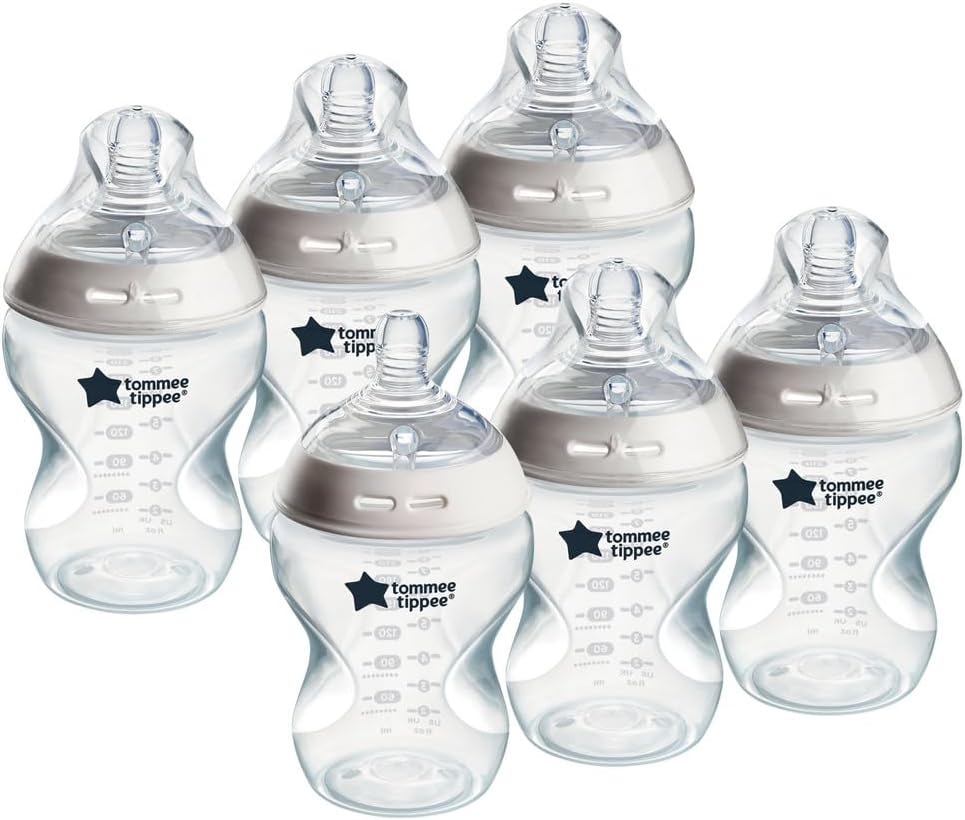
The Tommee Tippee Closer to Nature is a favourite among UK parents thanks to its close-to-breast nipple design and reliable anti-colic features.
- Soft, breast-like nipple helps with natural latch
- Anti-colic valve reduces wind effectively
- Wide neck for easy filling and cleaning
- Dishwasher and steriliser safe
- Nipple may wear out faster with frequent use
- Slightly pricier than basic bottles
Best for: Combination feeders and babies prone to colic. Pair with the Tommee Tippee Electric Steriliser for a seamless feeding setup.
Philips Avent Natural Bottle
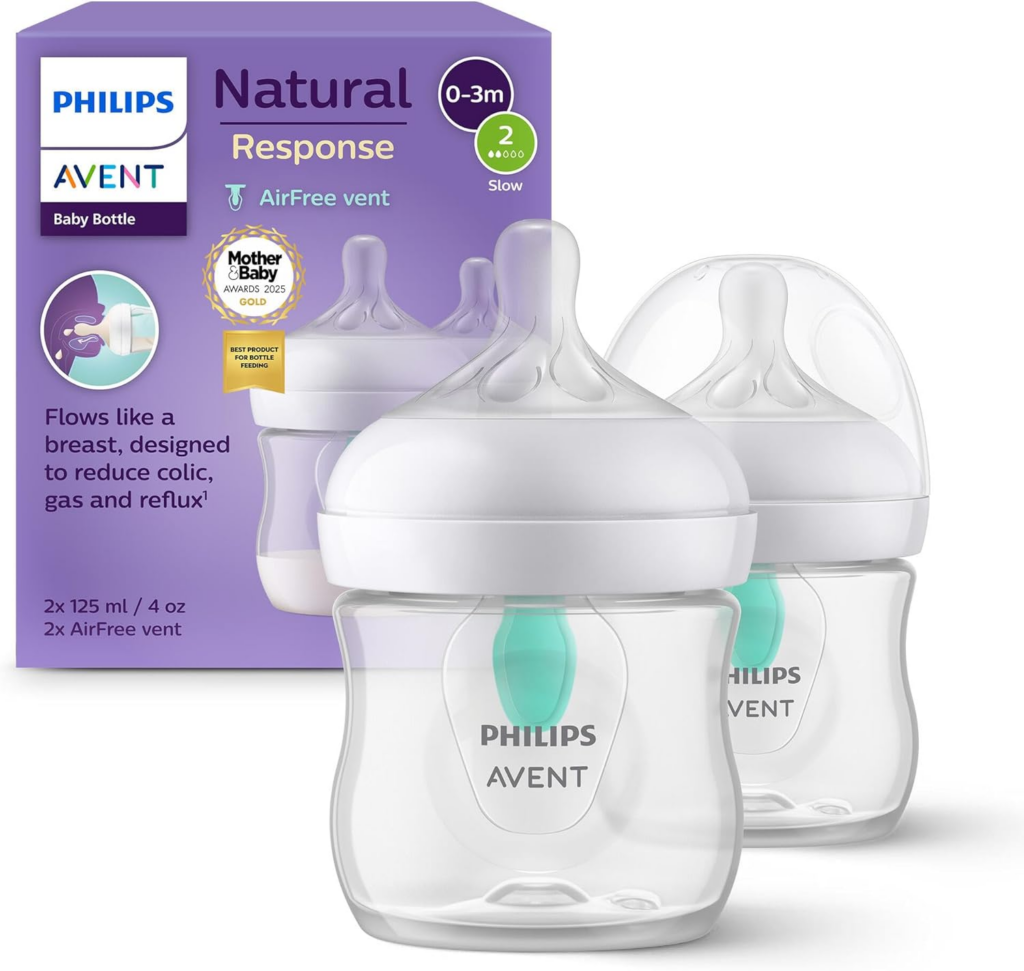
The Philips Avent Natural is well-known for its classic design and excellent anti-colic AirFree vent technology.
- Wide, breast-shaped nipple supports natural latch
- AirFree vent helps reduce colic and reflux
- Dishwasher and steriliser safe
- Durable build
- Larger bottle parts can be fiddly to assemble
- Nipple flow options can be inconsistent between batches
Best for: Babies with reflux or colic, and parents wanting reliable hygiene.
MAM Anti-Colic Bottle
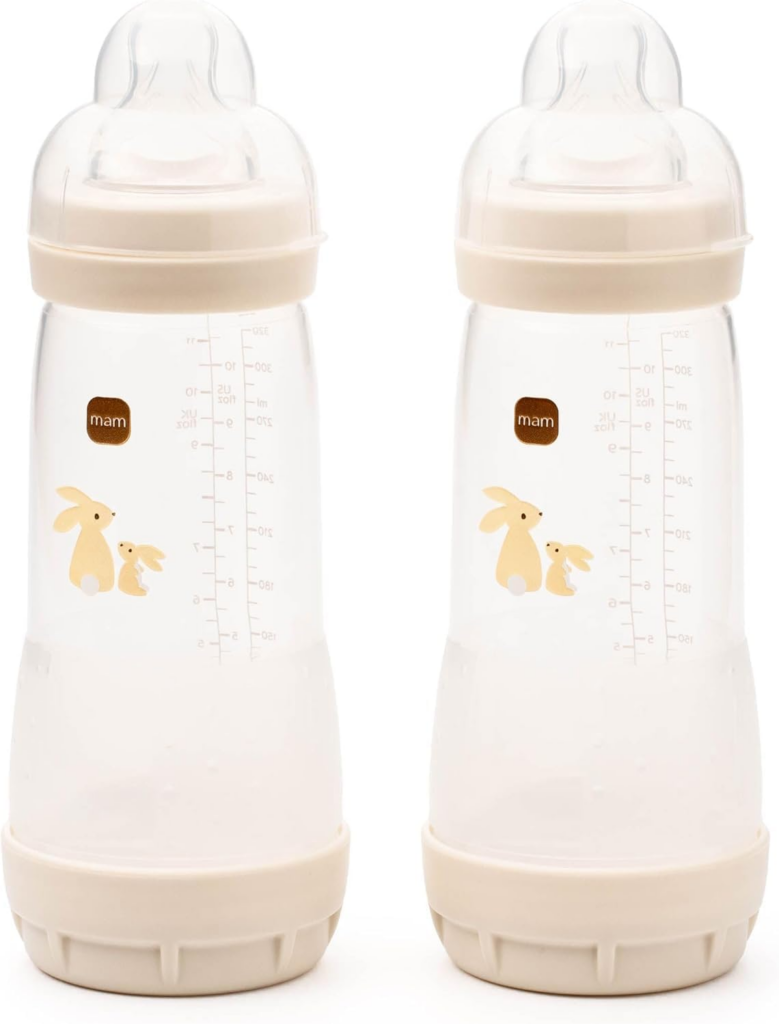
The MAM Anti-Colic Bottle is popular for its unique vented base, self-sterilising feature, and soft silicone nipples that babies often prefer.
- Self-sterilising feature speeds up cleaning on the go
- Anti-colic vent at the base reduces wind
- Soft, skin-like nipple texture
- Lightweight and durable
- Base vent can be tricky to clean thoroughly
- Best sterilised by boiling or microwave rather than dishwasher
Best for: Busy parents needing quick sterilising and babies who prefer soft nipples.
Dr. Brown’s Original Baby Bottle
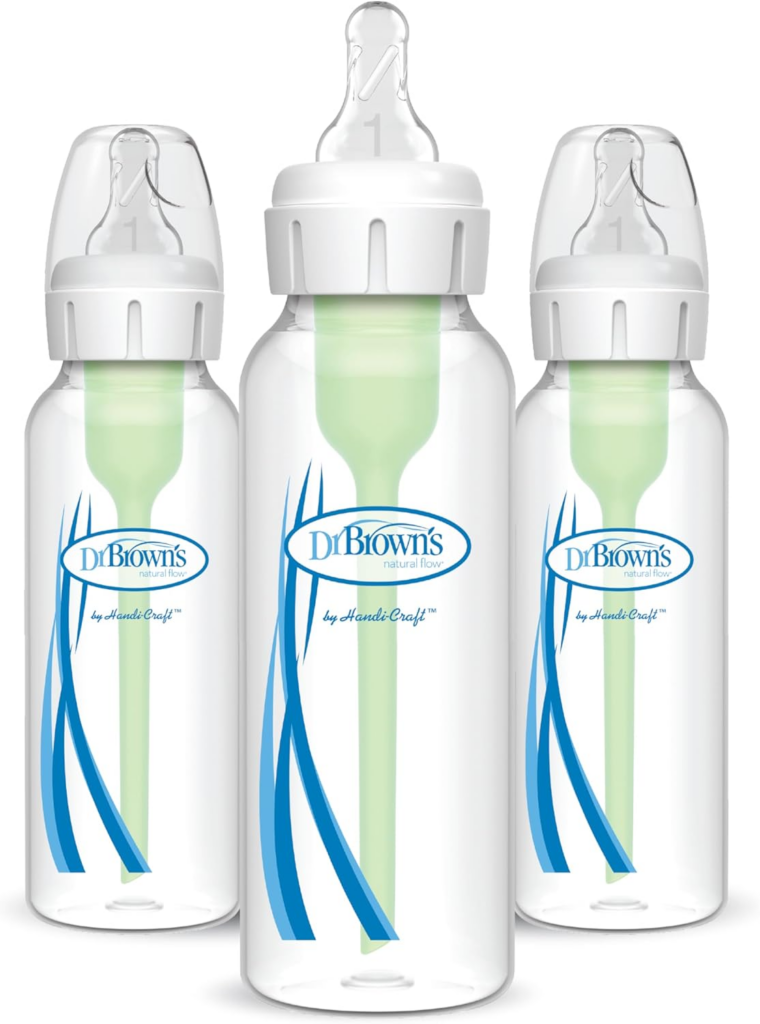
The Dr. Brown’s Original is famous for its internal vent system designed to reduce colic and preserve nutrients during feeding.
- Internal vent reduces air bubbles and gas
- Helps maintain vitamins C, A, and E in milk
- Multiple nipple flow rates available
- Durable glass and plastic options
- More parts to clean – can be time-consuming
- Bulkier design, less convenient for travel
Best for: Babies with severe colic or reflux. Many parents swear by Dr. Brown’s for colic relief.
💡 Pro Tips for Better Bottle Feeding
- Introduce bottles early: If you’re combination feeding, start bottles in week 2-3 to avoid nipple confusion.
- Warm bottles slightly: Room temperature or just-warm milk helps babies accept bottles more readily.
- Keep backup bottles: Have 8-10 bottles on hand so you’re not constantly washing.
- Check nipple flow: If your baby is choking or gulping, you might need a slower flow rate.
- Invest in a good steriliser: Paired with the right bottle, it saves hours every week. See my best bottle sterilisers guide. <\/ul>
🤔 Bottle Feeding FAQs
How many bottles do I need?
Most parents find 8-10 bottles comfortable if you’re washing every 1-2 days. For combination feeding, you might prefer fewer bottle types but more quantity.
Can babies switch between bottle types?
Yes, though it’s easier if you stick to one type in the early weeks. Once your baby is 8-12 weeks old, they’re usually flexible enough to handle different bottles if needed.
What’s the difference between slow, medium, and fast flow nipples?
Slow flow (0-3 months): For newborns to prevent overfeeding and choking. Medium flow (3-6 months): As babies get older and hunger increases. Fast flow (6+ months): For older babies who feed more efficiently. Always start slow—you can always move up.
Are glass or plastic bottles better?
Both are safe. Glass lasts longer and doesn’t stain, but it’s heavier and breaks. Plastic is lighter and portable but may stain over time. Many parents use a mix—glass at home, plastic on the go.
How do I know if my baby’s bottle is causing colic?
Signs include excessive gas, discomfort after feeds, and constant pulling away. Try switching to an anti-colic bottle (like Dr. Brown’s or MAM) for 1-2 weeks. If it improves, the bottle was likely the issue.
See more feeding recommendations in my 10 baby essentials that aren’t a waste of money or browse my full approved products guide.
Leave a Reply