This post may contain affiliate links – if you buy through them, I may earn a small commission at no extra cost to you, which helps support the site. All opinions are entirely my own.
Written by Molly, mum of two. Last updated: September 2026.
A good baby carrier is basically a spare pair of arms. It’s how you make a cup of tea with a baby who won’t be put down, do the school run with a toddler in one hand, or get round a busy day out without wrestling a pram through a gift shop.
The bad news is there are hundreds of them, and prices go from £20 to well over £200. So here’s a straightforward guide to the best baby carriers UK parents actually rate, what type suits which stage, and how to wear one safely.
Quick picks: the short version
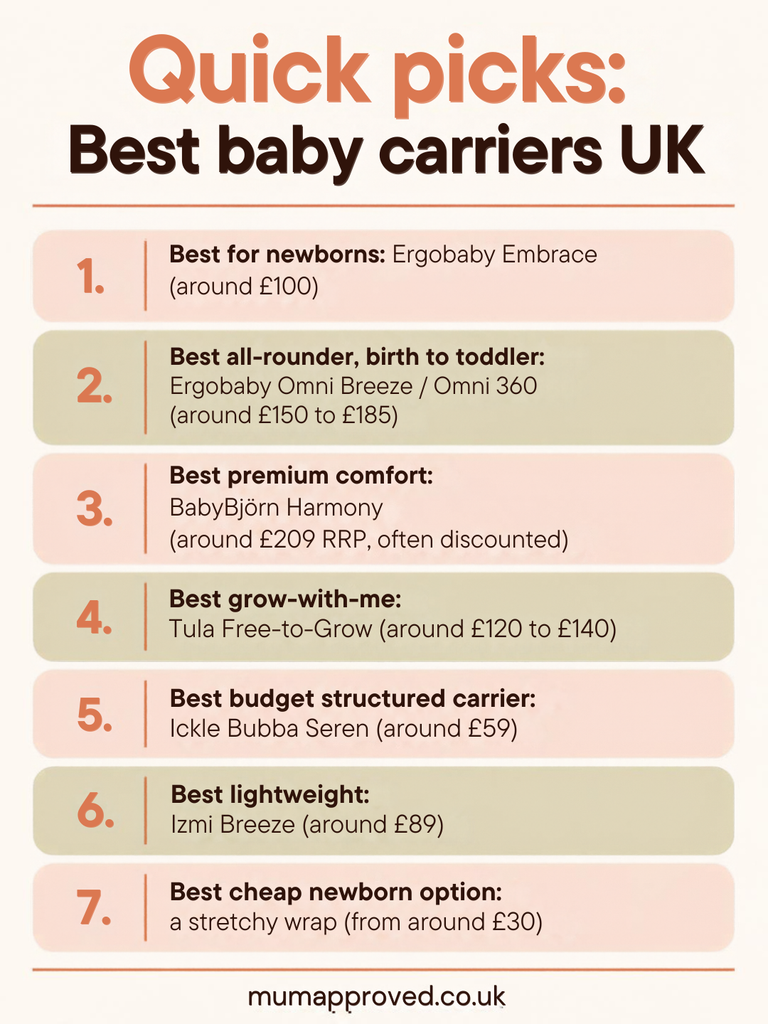
| Carrier | Best for | Price | Where to buy |
|---|---|---|---|
| Ergobaby Embrace | Newborns | Around £100 | Check price |
| Ergobaby Omni Breeze / 360 | Buying once (all-rounder) | Around £150 to £185 | Check price |
| BabyBjörn Harmony | Long walks and comfort | Around £209 RRP | Check price |
| Tula Free-to-Grow | Newborn to toddler, simple set-up | Around £120 to £140 | Check price |
| Ickle Bubba Seren | Best budget buy | Around £59 | Check price |
| Izmi Breeze | Light, cool days out | Around £89 | Check price |
| Stretchy wrap | Cheap newborn option | From around £30 | Check price |
Not sure where to start? Most families are happy with the Ergobaby Omni if they want one carrier for years, or the Ickle Bubba Seren if budget matters more. Prices change often, so check the current one before you buy.
Safety first: the TICKS rule
Before anything else, every UK parent using a sling or carrier should know TICKS. It’s the standard safety guidance used across the UK:
- Tight: snug enough that baby is held close to you
- In view at all times: you should be able to see baby’s face by glancing down
- Close enough to kiss: baby’s head should be close to your chin
- Keep chin off chest: there should be a finger’s width under baby’s chin
- Supported back: baby’s back supported in a natural position, tummy and chest against you
Also look for a carrier that keeps baby’s legs in a “spread squat” or M position, knees higher than bum. This is what’s known as hip-healthy, and it’s important for hip development. Many local areas have free sling libraries where a trained consultant can check your fit, which is well worth doing.
Types of baby carrier explained
Stretchy wraps
One long piece of stretchy fabric you tie around yourself. Snuggly and brilliant for newborns, cheap, but there’s a learning curve and they get less supportive as baby gets heavier.
Soft structured carriers (buckle carriers)
Padded straps and a waist belt with buckles. Quick on, quick off, and the most popular type. Many now work from birth without a separate insert.
Ring slings
A length of fabric threaded through two rings, worn over one shoulder. Great for quick ups and downs and hip carries with older babies. Not ideal for long walks.
Hybrid carriers
A mix of wrap and buckle. Softer than a structured carrier but quicker than tying a wrap.
Toddler / hiking carriers
Bigger panels for bigger kids, or framed backpacks for proper walks. Handy if your toddler still wants carrying on days out.
The best baby carriers UK 2026
1. Ergobaby Embrace: best for newborns
Around £100 | Check price on Amazon
Soft, light and far less bulky than a full-size structured carrier. The Embrace is designed around those early months, so it feels snug and cosy for a tiny baby without needing an insert. It’s a brilliant pick if you want wrap-like closeness without the tying.
Good: soft, simple, packs small, newborn-friendly from day one.
Not so good: you’ll likely outgrow it within the first year, so it’s not a one-and-done buy.
Best for: the fourth trimester and parents who want something easy.
2. Ergobaby Omni Breeze / Omni 360: best all-rounder
Around £150 to £185 | Check price on Amazon
If you want one carrier to last from birth into the toddler years, this is the one most UK reviewers land on. Multiple carry positions (front inward, front outward, hip and back), no newborn insert needed, and the mesh versions are much cooler in summer.
Good: long lifespan, lots of positions, works for parents of different sizes.
Not so good: bulkier, pricier, and a bit fiddly to adjust at first.
Best for: families who want to buy once.
3. BabyBjörn Harmony: best premium comfort
Around £209 RRP | Check price on Amazon
Soft, breathable 3D mesh and a design that spreads weight well, which makes a real difference on longer wears. It’s regularly on offer, so it’s worth watching the price.
Good: very comfy, feels premium, easy weight distribution.
Not so good: expensive at full price.
Best for: long walks and parents with back niggles.
4. Tula Free-to-Grow: best grow-with-me carrier
Around £120 to £140 | Check price
Adjusts from newborn to toddler without an insert, and it’s simpler than the do-everything carriers because it focuses on parent-facing front carry and back carry. Lots of lovely prints too.
Good: long lifespan, simpler set-up, comfortable.
Not so good: no outward-facing position, if that matters to you.
Best for: parents who don’t need world-facing.
5. Ickle Bubba Seren: best budget structured carrier
Around £59 | Check price on Amazon
A solid option if you don’t want to spend £150+. It offers parent-facing, world-facing and back carry, and is suitable from around 10 weeks up to 24 months (15kg).
Good: great value, several positions.
Not so good: not from birth, and it isn’t machine washable.
Best for: a budget carrier once baby is a bit bigger.
6. Izmi Breeze: best lightweight carrier
Around £89 | Check price on Amazon
Light, breathable and nowhere near as bulky as the bigger structured carriers. Easy to chuck in a changing bag for days out when you’ve got the pram too.
Good: lightweight, cool, mid-range price.
Not so good: less padding than premium carriers for really long wears.
Best for: days out and warmer weather.
7. A stretchy wrap: best cheap newborn option
From around £30 | Check price on Amazon
If you’re not sure babywearing is for you, a stretchy wrap is the cheapest way to try it in the newborn weeks. Watch a couple of tutorial videos first, and practise with a teddy.
Good: cheap, super snuggly, great for contact naps.
Not so good: learning curve, and less supportive past around 6 months.
What to look for when buying
- Age and weight range. Check whether it’s genuinely from birth, or needs an insert.
- Hip-healthy position. Wide seat that supports knee to knee.
- Waist belt and straps. A padded waist belt takes weight off your shoulders as baby gets heavier.
- Breathability. Mesh is a lifesaver in summer (and in hot shops).
- Ease of use. If it takes five minutes and a YouTube video to put on, you won’t use it.
- Who’s wearing it. If two parents with different builds will share it, look for easy adjustment.
- Washability. Babies leak. Machine washable is a bonus.
Top tip: try before you buy. Sling libraries let you hire carriers cheaply, so you can find what suits your body before spending £150.
Carrier or pram?
Honestly, most families end up with both. A carrier is brilliant for newborns, busy places and quick trips, while a pram saves your back on long walks and doubles as a nap spot. If you’re looking at a lightweight pram to go alongside, have a look at my best compact prams UK guide. And for the other things actually worth buying, see my 10 baby must haves that aren’t a waste of money.
FAQ
What is the best baby carrier for a newborn UK?
A soft, newborn-specific carrier like the Ergobaby Embrace or a stretchy wrap is ideal for the early weeks. If you want one carrier that lasts, choose a structured carrier that’s suitable from birth without an insert.
When can a baby go in a carrier?
Many carriers are suitable from birth (usually from around 3.2kg), but always check the manufacturer’s minimum weight. Some budget carriers only start from a few months old.
Is forward facing in a carrier bad?
Not bad, but it’s usually recommended only once baby has good head control (often around 4 to 6 months) and for shorter periods, as it’s more stimulating and less supportive than facing you.
How long can a baby stay in a carrier?
There’s no strict time limit if baby is positioned safely and following TICKS, but take breaks, check on baby regularly and follow the manufacturer’s guidance.
Are baby carriers bad for babies’ hips?
Not if they support a hip-healthy M position, with baby’s knees higher than their bum and thighs supported. Avoid carriers where legs dangle straight down from a narrow seat.
Can I use a baby carrier after a C-section?
Many parents do, but check with your midwife or GP first. A wrap or carrier that doesn’t put pressure on your scar (avoiding a tight low waist belt) is usually more comfortable.
Leave a Reply